
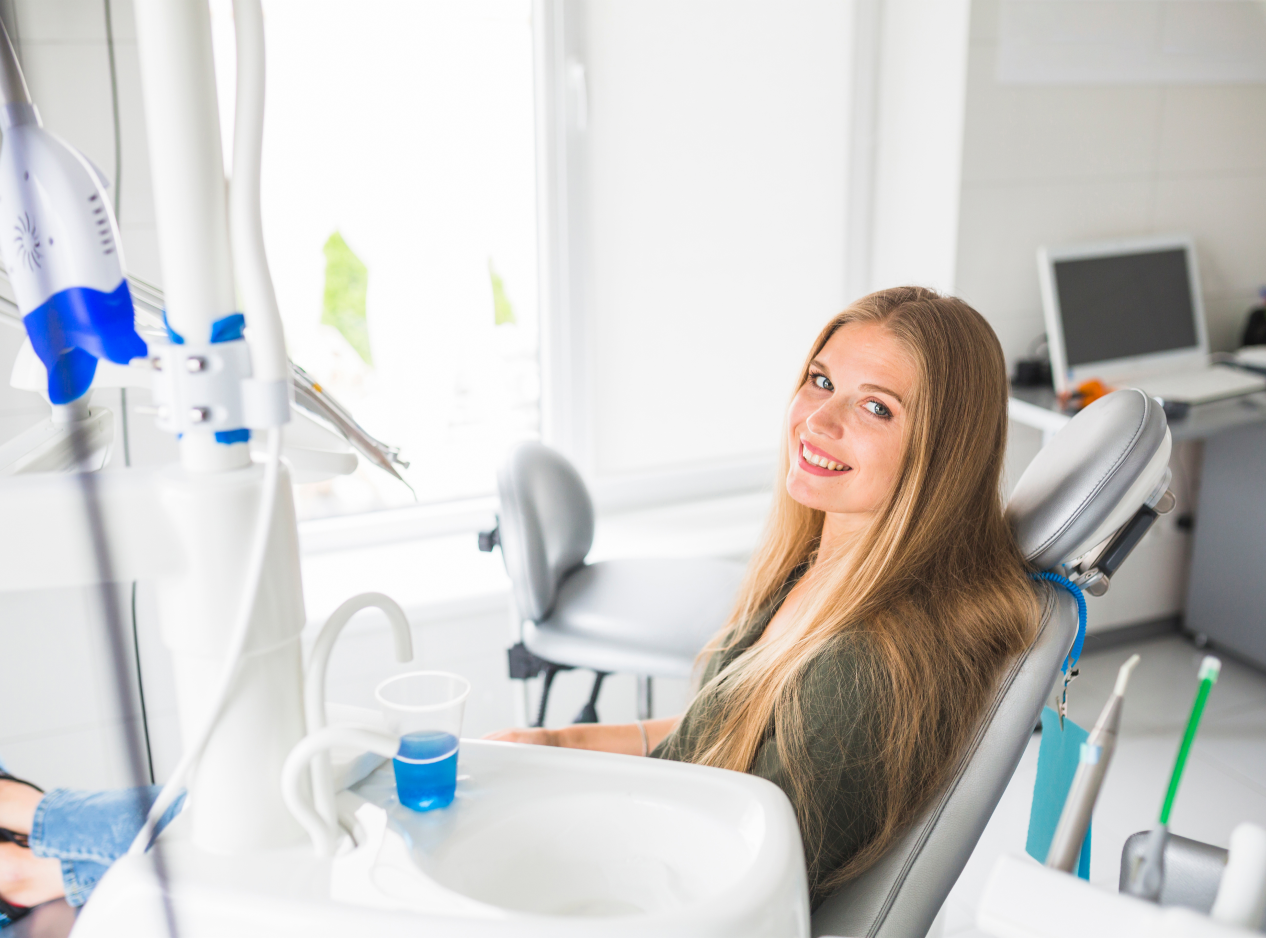
The high-pitched whine and vibration of a dental drill is enough to make many people tense before the appointment even starts. For small cavities, there is a quieter route that removes decay with a fine stream of particles. Knowing how it works and which cavities it suits helps you decide whether to ask about it. This blog covers how air abrasion can treat small cavities without a traditional drill, which cavities suit air abrasion treatment, which differences patients notice during treatment, which comfort options can support your treatment and how an appointment moves from exam to finished filling.
Air Abrasion Can Treat Small Cavities Without a Traditional Drill
Air abrasion cavity treatment uses a fine stream of particles, directed at the decayed part of a tooth, to remove tooth decay precisely. A small suction tip clears the debris as the area is cleaned.
This drill-free cavity treatment is a minimally invasive approach, which means it targets only the damaged area and leaves the surrounding healthy tooth in place. Once the decay is removed, a filling restores the tooth’s shape and function, just as it would after a traditional method.
Which Cavities Suit Air Abrasion Treatment
This method suits cavities that are still small and shallow. Larger cavities usually call for a different approach, so catching decay early makes a difference.
- Consider air abrasion for small, early cavities that have not yet spread deep into the tooth.
- Ask about it for shallow pits and grooves on the chewing surfaces.
- Look into it when you want to keep as much healthy tooth as possible.
- Expect a traditional method for larger or deeper cavities, where more decay needs to be removed.
Which Differences Patients Notice During Treatment
Patients often notice a few differences with this method compared with a traditional drill. How much depends on the size and location of the cavity.
Quieter Treatment
The treatment typically avoids the high-pitched whine of a drill. Many people also notice less vibration in the tooth.
Healthy Tooth Preserved
Because the stream can be aimed at the decayed area, more natural tooth is kept. This fits the conservative dentistry approach of removing only what is necessary.
Less Need for Freezing
For some small cavities, treatment may need little or no freezing. Your dentist decides based on the tooth and how you feel.
Which Comfort Options Can Support Your Treatment
Some people feel anxious about any dental work, even when the method is quieter. Tanglewood Dental Office offers nitrous oxide, which can help you relax during treatment, and an anesthesia wand for delivering freezing when it is needed.
These options can be used alongside the treatment, depending on your comfort and the work being done. Mention any dental anxiety at your visit so the right approach can be planned.
How an Air Abrasion Appointment Moves From Exam to Finished Filling
An air abrasion appointment moves through four steps. The first is an exam to confirm that your cavity is small enough for the method. The second is preparing the area and protecting your eyes and mouth.
The third step is the treatment itself, when the decay is removed with a fine stream of particles and suction. The fourth is placing the filling, shaping it and checking that your bite feels comfortable.
Get Small Cavities Checked for Air Abrasion at Tanglewood Dental Office in Oakville, ON
Tanglewood Dental Office in Oakville, ON offers air abrasion and fillings for patients with small cavities. Book a visit to find out whether it suits your tooth.
Frequently Asked Questions
Does air abrasion take longer than a traditional filling?
Time depends on the size and location of the cavity, and the steps are similar because a filling still follows. Tanglewood Dental Office can estimate the visit length at an exam.
Can air abrasion be used on cavities between teeth?
It can sometimes be used on cavities between teeth, depending on access and size. Tanglewood Dental Office uses digital X-rays to see which approach fits your tooth.
Is air abrasion suitable for children?
It may suit some children with small cavities, depending on the tooth and the child’s comfort. Tanglewood Dental Office provides family dental services, and a visit can show what fits.
Can air abrasion be used on teeth that already have fillings?
It is mostly used for small, new cavities, and the approach for a tooth with an existing dental filling depends on its size and condition. Tanglewood Dental Office can review it at an exam.
How can I prevent new cavities after treatment?
Brushing, flossing, fluoride, sealants and regular checkups lower the chance of new cavities. Tanglewood Dental Office offers fluoride treatments, dental sealants and checkups and cleanings.